
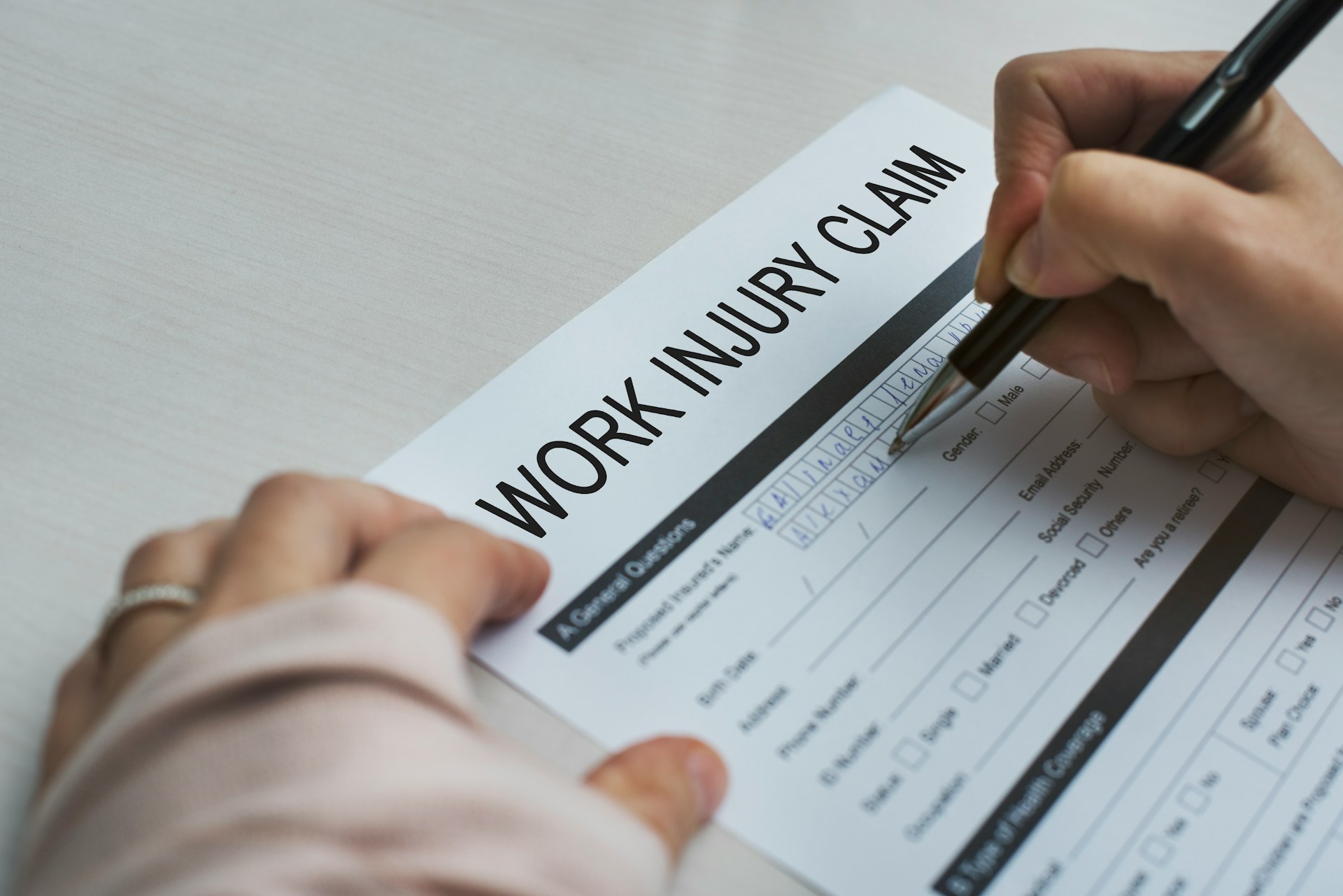
If your employer or their insurer has told you that an accidents at work claim was your own fault, that does not automatically end things. Compensation claims for workplace accidents in England and Wales are fault based, so you usually need to show some element of employer negligence. But responsibility for an accident rarely sits entirely with one person. If your employer’s failings played any part, whether that is inadequate training, a missing guard on a machine or poor supervision, you may still have grounds to claim, even where your own actions contributed too.
Can you claim if it was your fault?
In most cases, no, if the accident was entirely down to your own actions with no failing on your employer’s part at all. That situation is rarer than many people assume, though. If your employer contributed in any way, through inadequate training, a missing risk assessment, faulty equipment or poor supervision, you may still have a valid accident at work claim, even where you also played a part in what happened.
Solicitors call this a fault-based system. It works differently from the no-fault schemes some other countries use, where an injury at work is covered regardless of who caused it. Here, you need to show your employer breached the duty of care it owes you, whether that comes from the general common law duty to provide a safe system of work, or specific statutory duties such as those set out in the Health and Safety at Work etc. Act 1974. Those duties cover everything from training and supervision to the condition of equipment and the way work is planned, and they apply whether you were hurt in a factory, on a construction site, in a warehouse or operating a forklift.
What actually counts as “your fault”?
Employers and insurers often use the word fault loosely. There is a real difference between an honest slip while following the system you were trained in, a mistake caused by inadequate training or supervision, and conduct that is genuinely reckless, such as deliberately ignoring a clear and recent safety instruction.
In our experience working with people who have been hurt at work, most accidents sit somewhere in the middle. A worker rushes because the workload set for the shift was unrealistic. A guard is missing from a machine because maintenance was delayed. Instructions were given once, months earlier, with no refresher since. None of this excuses risk taking on your part, but it does mean your employer is unlikely to be entirely blameless, even if their first reaction is to point the finger back at you.
These sit among the common accidents at work we see time and again, and a closer look at what actually happened usually tells a more balanced story than the first assumption does. It is also worth being clear on a distinction that gets lost quickly. An accident being partly caused by your own actions is legally very different from it being entirely your fault. The law has a specific name for that middle ground.
Contributory negligence: partly at fault does not mean no compensation
If you were partly to blame but your employer’s negligence also played a part, you can usually still claim. Under the Law Reform (Contributory Negligence) Act 1945, your compensation is reduced by a percentage reflecting your share of responsibility, rather than refused altogether. A claim otherwise worth £40,000 with a 25% contributory negligence finding would typically be settled at £30,000.
This usually surfaces once you have already reported the accident and a claim is underway. Your solicitor sends a letter setting out what happened and who is responsible. The employer’s insurer then has to respond, and broadly has three options: accept full responsibility, reject the claim and provide reasons, or accept partial responsibility while arguing you should shoulder some of the blame too. You can read more about how the personal injury claim process works from that point.
There is no fixed formula for working out the reduction. It depends on how much your actions contributed to the accident happening at all, or to how serious your injuries turned out to be. The ranges below give a general sense of how this can play out in practice, though every case is judged on its own facts.
| Your part in what happened | Typical reduction in compensation |
|---|---|
| A minor lapse in concentration while otherwise following a safe system of work | 0% to 15% |
| Not using PPE you had been trained and equipped to use | 10% to 25% |
| Ignoring a clear, recent safety instruction | 25% to 50% |
| Deliberately unsafe or reckless conduct unrelated to your job | Claim may fail entirely |
These figures are illustrative rather than guaranteed outcomes. A court, or an insurer negotiating a settlement, weighs what is fair given everything that happened, not just one factor taken in isolation.
Why your employer or their insurer might say it was your fault
It is worth being a little sceptical of an early, informal verdict from your employer or their insurer. An insurer has a straightforward financial interest in reducing or avoiding a payout, and raising contributory negligence, or denying liability outright, is a common opening position rather than a final legal conclusion. Your employer, meanwhile, may genuinely believe the accident was your fault, particularly if accepting otherwise means admitting a gap in their own training or safety systems.
This is one of the more persistent personal injury claims myths: the idea that being told you were at fault settles the matter. It does not. One of the most common mistakes people make with a work accident claim is accepting that verdict at face value and not pursuing things further, when an independent look at the training records, maintenance logs or witness accounts might tell a different story.
What to do if you are told the accident was your fault
A few practical steps make a real difference to how your position looks later, whatever the eventual split of responsibility turns out to be.
- Report the accident promptly and accurately, and make sure it goes in the accident book. For certain serious injuries, your employer may also have a legal duty to notify the Health and Safety Executive under RIDDOR, regardless of who was at fault.
- Stick to the facts when you give your account. Do not speculate about who was to blame, and do not sign anything an insurer sends you without getting advice first.
- Gather what evidence you can. Photos, witness contact details and CCTV footage tend to disappear or get overwritten quickly, so acting early matters.
- Keep a record of any time off, medical appointments and lost income, since this becomes part of your evidence for a loss of earnings claim later on.
- Be straightforward about your own role in the accident from the outset. Understating it can be used against your credibility later, and our note on fundamental dishonesty in personal injury claims explains why that risk is worth taking seriously.
- Speak to a solicitor early. Many firms, including ours, work on a no win no fee basis, so getting advice at this stage costs you nothing upfront.
Could you be disciplined or dismissed?
A compensation claim and a disciplinary process are two separate things, even though they can run alongside each other. Your employer can still investigate the accident and, in serious cases, take disciplinary action if your conduct amounted to genuine misconduct or gross negligence. An honest mistake made while following normal procedure is a different matter, and a fair employer should follow a proper process rather than jumping straight to a warning or dismissal.
If you are worried about your job on top of everything else, it is worth reading about your broader rights after an accident at work, and specifically whether you can be sacked after an accident at work that was partly or mainly down to you. Being at fault for an accident does not, on its own, give your employer a free pass to dismiss you unfairly.
How long do you have to make a claim?
You generally have three years from the date of the accident to start court proceedings, under section 11 of the Limitation Act 1980. This deadline is strict. Miss it, and your claim is very likely to become statute barred, meaning the court can refuse to hear it at all, regardless of how strong the case would otherwise have been, and regardless of who was ultimately at fault.
There are some exceptions. If you were under 18 at the time of the accident, the three years does not usually start running until your eighteenth birthday. If you lack the mental capacity to bring a claim yourself, the clock may not run unless capacity is regained. You can find more detail on how long you have to claim after an accident at work here.
Because working out fault, and any contributory negligence argument, can take time to unpick properly, with witness statements, training records and expert evidence all needing to be gathered, it is worth getting advice well before that deadline rather than close to it.
Frequently asked questions
A few of the questions we are asked most often on this subject, gathered here for a quick answer.
Can I claim compensation if I was partly to blame for an accident at work?
Yes, in many cases. Your compensation will usually be reduced to reflect your share of responsibility rather than refused outright, provided your employer’s negligence contributed in some way too.
What is contributory negligence?
It is the legal principle that lets a court, or an insurer settling out of court, reduce your compensation by a percentage to reflect your own part in causing an accident or worsening your injuries, without defeating your claim entirely.
Can my employer discipline me for an accident that was my fault?
Possibly, if the accident involved genuine misconduct or gross negligence, though they must follow a fair process. An honest mistake made while following normal procedure is unlikely to justify serious disciplinary action, and it does not automatically rule out a compensation claim either.
Do I have to admit fault when I report the accident?
You should be accurate and complete about what happened, including your own actions, rather than trying to hide or downplay your part in it. Being straightforward protects your credibility later on. That is a very different thing from formally accepting legal liability, which is a decision for the insurers and, if necessary, the court.
What if I need money while my claim is being sorted out?
This is separate from your compensation claim. If you are off work because of your injury, you may be entitled to Statutory Sick Pay, currently up to £123.25 a week, or 80% of your average weekly earnings if lower, for up to 28 weeks. Your solicitor can also advise whether an interim payment may be possible once liability is clearer.
How long do I have to bring a claim?
Generally three years from the date of the accident, with exceptions for children and people who lack the mental capacity to claim for themselves, as set out above.
Talk to Mark Reynolds Solicitors
Being told an accident was your fault is not the end of the road, and it should not stop you getting proper advice. We offer a free, no obligation conversation to look at what actually happened, not just what you have been told, and we act on a no win no fee basis so there is no financial risk in finding out where you stand. Read more on the steps involved in making a work accident claim, or contact our team today to talk through what happened. We have offices in Liverpool, Leigh, Runcorn and Warrington, and we are happy to have that conversation whenever you are ready.