
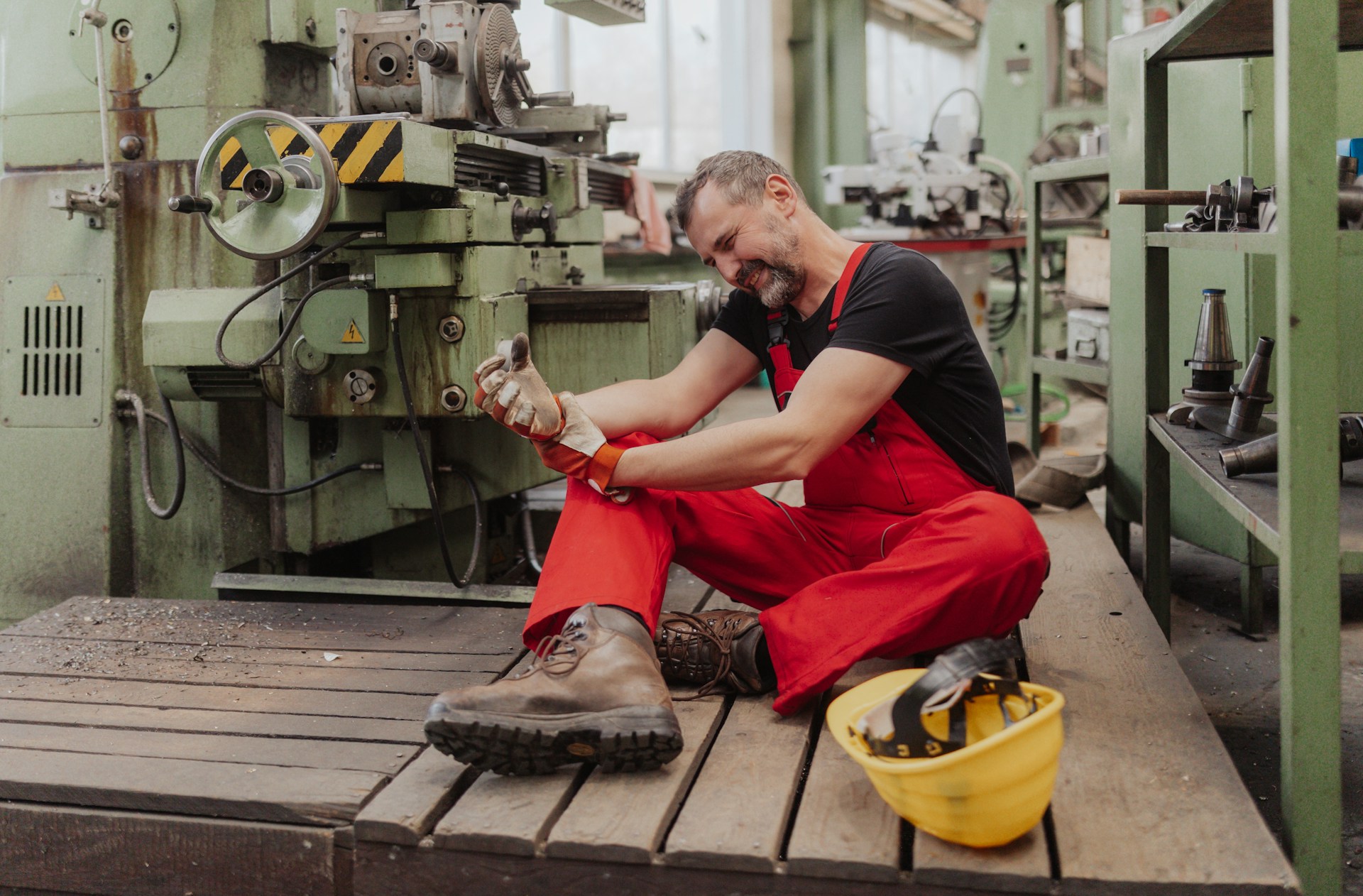
If you have suffered an injury in a factory because you were pressured to work too quickly, meet unrealistic production targets or disregard safety procedures, your employer may be liable. Businesses are entitled to set productivity targets, but they must ensure that employees can achieve them without being exposed to unreasonable health and safety risks.
At Mark Reynolds Solicitors, we help injured workers pursue factory accident claims where unsafe working practices, excessive workloads or inadequate supervision have contributed to their injuries. Establishing whether production pressures influenced your accident can be an important part of determining employer negligence.
According to the Health and Safety Executive (HSE), manufacturing recorded an estimated annual average of 2,240 non-fatal workplace injuries per 100,000 workers in Great Britain between 2023/24 and 2025/26. Although these figures cover all causes of workplace injuries, they demonstrate the continuing importance of effective factory safety management.
How unrealistic production targets contribute to factory injuries
Production targets become a safety concern when employees cannot reasonably achieve them while following established safety procedures. Excessive workloads, insufficient staffing, increased production line speeds and pressure to minimise downtime can encourage unsafe working practices, increasing the likelihood of machinery accidents, manual handling injuries and mistakes caused by fatigue.
The relationship between production targets and workplace safety is particularly important in manufacturing environments where employees work around moving machinery, heavy materials and hazardous equipment.
| Production pressure | Potential consequences |
| Increased production line speeds | Machinery accidents and reduced reaction times |
| Insufficient staffing | Excessive workloads and unsafe manual handling |
| Pressure to minimise downtime | Unsafe attempts to clear machinery blockages |
| Reduced opportunities for rest | Fatigue, concentration problems and handling errors |
| Delayed equipment maintenance | Mechanical failures and defective machinery |
| Excessive overtime | Reduced alertness and increased physical strain |
| Performance-related bonuses | Encouragement to prioritise output over safe working practices |
The HSE’s guidance on workload and production pressures recognises that excessive production demands and productivity-related bonuses can encourage employees to work beyond their natural capacity.
An employer should consider whether productivity expectations are realistic given the physical demands, available equipment and staffing levels involved.
Employers’ legal responsibilities when setting production targets
Employers must take reasonable steps to protect workers from foreseeable risks. Setting ambitious production targets is not unlawful in itself, but employers may be negligent if they introduce or maintain working arrangements that expose employees to avoidable dangers.
Several pieces of legislation are particularly relevant to factory working conditions:
- Health and Safety at Work etc. Act 1974: Requires employers to protect employees’ health, safety and welfare so far as is reasonably practicable.
- Management of Health and Safety at Work Regulations 1999: Require suitable and sufficient risk assessments and appropriate preventative measures.
- Provision and Use of Work Equipment Regulations 1998 (PUWER): Establish requirements for equipment safety, guarding, maintenance and training.
- Manual Handling Operations Regulations 1992: Require employers to avoid hazardous manual handling where reasonably practicable and assess and reduce unavoidable risks.
- Working Time Regulations 1998: Establish requirements relating to working hours, rest periods and breaks, subject to applicable exceptions.
Employers should review their risk assessments when significant changes to production processes, staffing arrangements or working methods affect employee safety.
A breach of health and safety regulations does not automatically establish entitlement to compensation. Your claim will generally need to demonstrate that your employer failed to take reasonable care and that this failure caused or contributed to your injury.
When production pressure may establish employer negligence
Your employer may be liable if they knew, or reasonably should have known, that production demands were encouraging unsafe behaviour but failed to address the problem.
For example, imagine that a packaging machine regularly develops blockages. The correct procedure requires workers to stop and safely isolate the equipment before clearing them. However, supervisors repeatedly complain about downtime and expect employees to resolve blockages without interrupting production.
If you suffer an injury because this unsafe practice has become routine, the investigation should consider management expectations, supervision and the wider working environment rather than focusing exclusively on your actions.
Other circumstances that may indicate employer negligence include:
- Ignoring complaints about unrealistic production targets.
- Requiring employees to undertake physically demanding work without adequate recovery time.
- Discouraging workers from stopping defective machinery.
- Increasing production line speeds without assessing additional risks.
- Failing to provide sufficient staff for tasks requiring multiple workers.
- Allowing safety procedures to be routinely ignored to meet deadlines.
If your injury involved unsafe equipment, our specialist machinery accident claims team can investigate whether inadequate safeguards or unsafe operating procedures contributed to what happened.
A successful compensation claim involving excessive factory workloads
At Mark Reynolds Solicitors, we have represented workers injured because of excessive demands in manufacturing environments.
In the case of P v Tulip Ltd, our client worked in a meat processing factory and developed an inguinal hernia as a result of an excessive workload. The injury required surgery, and the client successfully pursued court proceedings against their employer for compensation.
This case demonstrates that factory injury claims are not limited to sudden machinery accidents. Excessive physical demands and unsafe workloads can also provide grounds for compensation where negligence and causation can be established.
You can read more about this and other successful cases in our accident at work case studies.
Can your employer blame you for rushing or taking shortcuts?
Your employer may argue that you failed to follow safety instructions or took an unnecessary risk while attempting to meet production targets. However, this does not automatically prevent you from claiming compensation.
An investigation should consider whether safety procedures were genuinely enforced, whether supervisors knew about unsafe practices and whether employees could realistically meet their targets without taking shortcuts.
There is an important difference between having a written safety procedure and ensuring that employees have sufficient time, resources and supervision to follow it.
If you were partly responsible for your injury, your compensation may be reduced under the principle of contributory negligence, established by the Law Reform (Contributory Negligence) Act 1945.
However, shared responsibility does not necessarily prevent a successful claim.
Evidence that production pressure contributed to your injury
When investigating an injury associated with unrealistic production targets, evidence of everyday working practices can be just as important as evidence of the accident itself.
Your solicitor may need to establish what was expected of employees, whether safety concerns had previously been raised and how supervisors responded.
| Evidence | How it may support your claim |
| Production records | Demonstrate output expectations and changes to production speeds |
| Emails and workplace messages | Show management instructions and pressure to meet deadlines |
| Shift schedules and overtime records | Establish workload, staffing levels and potential fatigue |
| Witness statements | Confirm unsafe working practices or pressure from supervisors |
| Risk assessments | Identify whether workload and production changes were properly assessed |
| Maintenance records | Reveal whether equipment repairs were delayed to maintain production |
| Previous complaints and near-miss reports | Demonstrate management awareness of safety concerns |
| CCTV footage | Help establish the circumstances surrounding your injury |
Report your accident, seek appropriate medical attention and keep copies of relevant communications that you already lawfully hold.
You do not need to obtain confidential company records yourself. Your solicitor can investigate what happened and seek disclosure of relevant documents through the appropriate legal processes.
Recovering compensation for injuries caused by excessive production demands
If your employer’s negligence caused or contributed to your injury, you may be entitled to compensation for pain and suffering, lost earnings, treatment expenses and rehabilitation. Where the consequences are long-term, your claim may also account for reduced earning capacity, ongoing care and other future financial losses.
For example, a serious hand injury may prevent you from returning to production line work, even after your initial treatment has concluded. Your compensation should consider these longer-term employment consequences alongside the immediate physical injury.
Keep payslips, sick pay records and employment correspondence to help establish the financial impact of your accident. Our guide to the evidence needed for a loss of earnings claim explains which documents may support this part of your compensation claim.
Speak to Mark Reynolds Solicitors
Meeting production targets should never require you to compromise your safety. If excessive workloads, unrealistic deadlines or management pressure contributed to your factory injury, you may have grounds to pursue compensation.
At Mark Reynolds Solicitors, we can investigate your working conditions, assess your employer’s responsibilities and help you recover compensation that reflects the impact of your injury.
We handle eligible workplace injury claims on a No Win No Fee basis and can help you pursue compensation for pain and suffering, lost earnings, rehabilitation, ongoing care and future financial losses.
In addition to factory and machinery accidents, our specialist workplace injury services include:
- Construction accident claims
- Crush injury claims
- Fall from height claims
- Farm accident claims
- Forklift accident claims
- Manual handling injury claims
- Repetitive strain injury claims
- Slips and trips claims
- Warehouse accident claims
Call us on 0800 002 9577 for a free initial consultation to discuss your circumstances and legal options.