
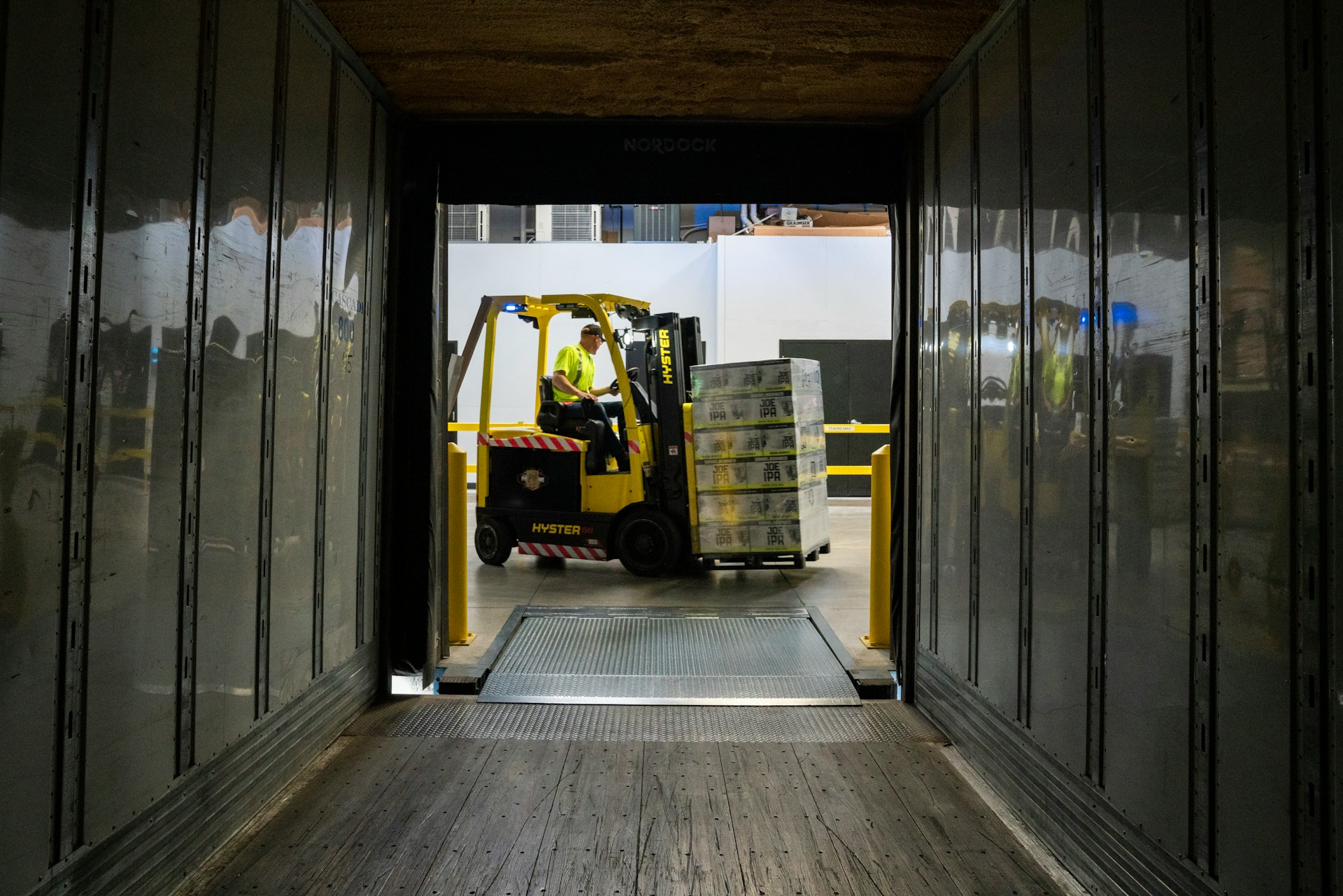
If you have been struck by a forklift because the operator could not see you, your employer may be legally responsible if inadequate safety measures contributed to the accident. Poorly designed pedestrian routes, obstructed visibility, inadequate operator training and ineffective warning systems can all indicate a failure to provide a reasonably safe working environment.
At Mark Reynolds Solicitors, we help injured workers pursue forklift accident claims where negligence has caused or contributed to their injuries. Even if the forklift driver did not realise you were there, you may have grounds to claim if your employer failed to address foreseeable visibility risks.
According to Health and Safety Executive (HSE) statistics, 24 workers were killed after being struck by moving vehicles in Great Britain during 2025/26. Although this figure covers all types of workplace vehicles rather than forklifts alone, it highlights the serious consequences of inadequate workplace transport safety.
Why forklift blind spots put pedestrians at risk
A forklift blind spot is an area that the operator cannot see clearly from their normal driving position. Restricted visibility may result from the forklift’s mast, overhead guard, structural components or the load being transported. Warehouse shelving, stacked materials and poorly designed traffic routes can create additional visibility problems.
Unlike ordinary road vehicles, forklifts frequently operate in confined spaces where pedestrians are collecting stock, preparing orders or carrying out loading activities.
The following circumstances can increase the likelihood of a collision.
| Visibility hazard | Risk to pedestrians |
| Large or bulky loads | The operator may be unable to see someone walking ahead of the forklift. |
| Restricted rear visibility | Pedestrians may not be visible when the forklift reverses. |
| Blind corners and aisle intersections | Workers and operators may have insufficient time to react to each other. |
| Poor workplace lighting | Pedestrians may be difficult to identify in dimly lit areas. |
| Obstructed pedestrian crossings | Stored materials may prevent operators from seeing people crossing. |
| Narrow loading areas | Pedestrians may have limited space to move away from approaching vehicles. |
The existence of a blind spot does not automatically establish negligence. The relevant question is whether your employer recognised the danger and took reasonable steps to prevent pedestrians from being exposed to it.
Employers’ legal responsibilities for forklift visibility
Employers have a duty to take reasonable care of their employees’ health and safety. Where forklifts operate near pedestrians, this includes assessing visibility risks, organising safe traffic routes, providing suitable equipment and ensuring that operators receive appropriate training and supervision.
Several pieces of workplace health and safety legislation are particularly relevant:
- Health and Safety at Work etc. Act 1974: Requires employers to protect employees’ health, safety and welfare so far as is reasonably practicable.
- Management of Health and Safety at Work Regulations 1999: Require suitable and sufficient assessments of workplace health and safety risks.
- Workplace (Health, Safety and Welfare) Regulations 1992: Regulation 17 requires workplaces to be organised so that pedestrians and vehicles can circulate safely.
- Provision and Use of Work Equipment Regulations 1998 (PUWER): Regulation 28 requires suitable visibility aids where a driver’s direct field of vision is inadequate to ensure safety.
The HSE guidance on separating pedestrians and vehicles recommends keeping pedestrian and vehicle routes separate wherever reasonably possible, with suitable barriers, crossing points and clear visibility where routes intersect.
Although breaches of these regulations can provide important evidence, a successful civil compensation claim generally requires you to establish negligence and show that it caused or contributed to your injuries.
When an employer may be liable for a forklift blind spot accident
Your employer may be liable if they knew, or reasonably should have known, that restricted forklift visibility created a risk of pedestrian injury but failed to introduce suitable precautions.
For example, you may have been instructed to collect stock from a warehouse aisle where forklifts regularly carried large pallets. If there were no protective barriers, designated pedestrian routes or effective arrangements for controlling vehicle movements, the accident may have resulted from an unsafe system of work.
Other examples of potential employer negligence include:
- Failing to provide appropriate mirrors or visibility aids.
- Allowing forklifts to operate in areas with inadequate lighting.
- Failing to act on previous collisions, near misses or safety complaints.
- Permitting storage materials to obstruct pedestrian crossings.
- Allowing inadequately trained operators to drive forklifts.
- Failing to supervise unsafe driving and loading practices.
Providing high-visibility clothing or installing reversing alarms does not necessarily discharge an employer’s responsibilities. Such measures may help reduce risks, but they are not always an adequate substitute for effective pedestrian and vehicle separation.
A real example of inadequate forklift visibility management
On 24 November 2021, an employee of Exwold Technology Limited was struck by a forklift at the company’s Hartlepool site. The load obstructed the driver’s view, preventing them from seeing the pedestrian.
An HSE investigation found that the company had failed to manage forklift operations and designated pedestrian routes effectively.
On 29 January 2026, the company was fined £50,000 for 2 health and safety breaches involving this incident and a separate machinery accident, as detailed in an HSE prosecution announcement.
The case illustrates why responsibility can extend beyond the forklift driver’s actions. An employer must consider how loads affect visibility and whether pedestrians can move safely around operating vehicles.
An HSE prosecution is separate from a civil compensation claim. You do not need your employer to have been prosecuted before pursuing compensation.
Can your employer blame the forklift driver or you?
Your employer may argue that the forklift operator failed to follow their training or that you entered an unsafe area. However, this does not automatically remove the employer’s responsibility.
Employers may be vicariously liable for negligent actions committed by employees in the course of their employment. They may also be directly responsible for inadequate supervision, unsafe traffic arrangements or failures to address known visibility problems.
If you were partly responsible for the accident, your compensation could be reduced under the principle of contributory negligence. However, shared responsibility does not necessarily prevent you from making a claim.
Our guide to being blamed for an accident at work explains how allegations of shared responsibility can affect your compensation.
Evidence that can establish responsibility
Evidence of restricted visibility and workplace safety arrangements can be particularly important when investigating forklift blind spot accidents. Your solicitor may need to establish what the operator could reasonably see, where you were walking and whether suitable measures were in place to prevent a collision.
| Evidence | How it can support your claim |
| CCTV footage | Shows vehicle movements, pedestrian positions and the circumstances of the collision. |
| Photographs of the workplace | Identifies restricted visibility, unsafe crossings and missing safety barriers. |
| Forklift specifications | Helps establish visibility limitations and available safety features. |
| Risk assessments | Shows whether pedestrian collision risks were identified and addressed. |
| Operator training records | Helps establish whether the driver received suitable instruction. |
| Previous near-miss reports | May demonstrate that your employer was aware of recurring dangers. |
| Witness statements | Provides independent accounts of working practices and the accident. |
Seek medical attention, report the accident and ask for relevant CCTV footage to be preserved as soon as possible. Record the circumstances while they remain fresh in your memory, but do not put yourself at risk by entering an active forklift operating area to collect evidence.
You do not need to obtain every document yourself. Your solicitor can investigate and request relevant records from your employer or other responsible organisations.
Recovering compensation for pedestrian injuries
If employer negligence caused or contributed to your injuries, your compensation may account for pain and suffering, lost earnings, rehabilitation, treatment expenses and ongoing care requirements.
Forklift collisions can cause fractures, serious crush injuries and permanent disabilities. Where your ability to work or live independently has been affected, our serious injury solicitors can help assess your long-term needs and financial losses.
Compensation should reflect the actual consequences of your injury, including future expenses where supported by appropriate medical and financial evidence.
Speak to Mark Reynolds Solicitors
A forklift driver’s inability to see you does not necessarily mean that your accident was unavoidable. Employers must consider restricted visibility when organising vehicle movements and protecting pedestrians.
At Mark Reynolds Solicitors, we can investigate the circumstances of your accident, establish who may have been responsible and help you pursue compensation for your injuries and associated financial losses.
We handle eligible workplace injury claims on a No Win No Fee basis and can help you seek compensation for lost earnings, rehabilitation, ongoing care and other injury-related losses.
In addition to forklift accidents, our specialist workplace injury services include:
- Construction accident claims
- Crush injury claims
- Factory accident claims
- Fall from height claims
- Farm accident claims
- Machinery accident claims
- Manual handling injury claims
- Repetitive strain injury claims
- Slips and trips claims
- Warehouse accident claims
Call us on 0800 002 9577 for a free initial consultation and advice about your legal options.